
Admit Everyone is a speculative poster series imagining the end of the world, not as destruction, but as return. This project was created for a decolonial praxis class, where our end-of-semester assignment was to explore dystopian end-of-the-world narratives through a decolonial lens.
This series presents fictional posters for future concerts, dances, and performances, imagined as ephemera from a dystopian era. But unlike most visions of dystopia, this future is not defined by collapse or violence. Instead, it asks a different question: what gets to survive? My answer is art. But not the kind of art we have been taught.
What would art look like if it were rooted in Indigenous values of connection rather than capitalist metrics of success? In many Indigenous worldviews, art is inseparable from ceremony, healing, and relationality. It is not a product; it is a practice. It is woven into life itself. By contrast, settler-colonial societies have framed art as something you must be good at, something to monetize, something judged by its output rather than its process. It is this violence, the policing and commodification of creativity, that this work critiques.
Each poster in the series carries touches of graffiti, intentionally. Real graffiti, to me, is one of the last unregulated art forms. It is not hung in galleries, does not win awards, and cannot be sold or preserved. It is made in public, for the public, until it is erased. Graffiti is honest. It is how people reclaim space. It is how they declare: I was here. I made this. This series honours that same spirit.
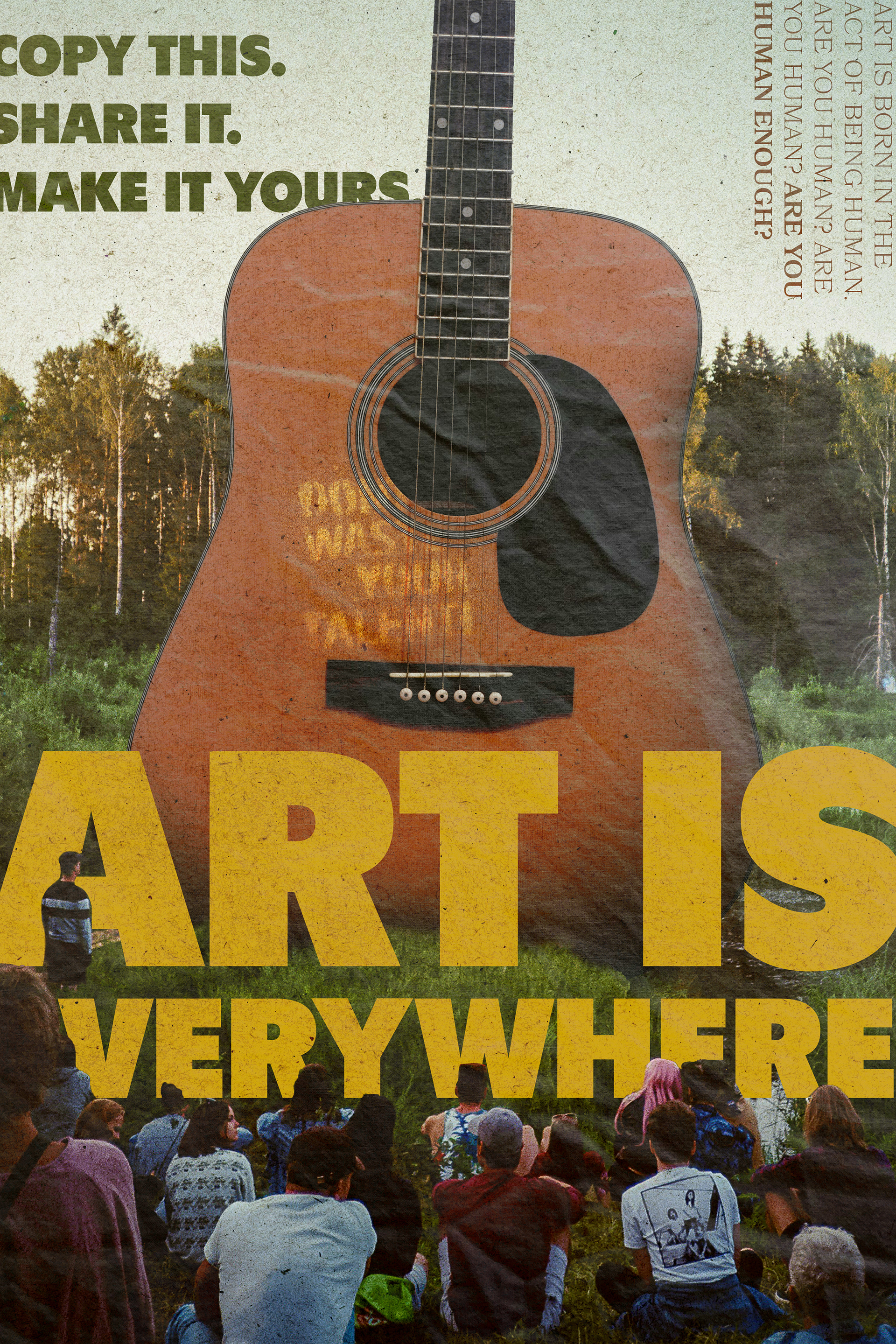
One poster simply states: “Art is Everywhere.” It is a refusal of the notion that art only exists in museums or theaters. Art is in the streets, in backyards, in side alleys. It lives in your cousin’s playlist or your grandmother’s quilt. It is not new, but we have been made to forget it.
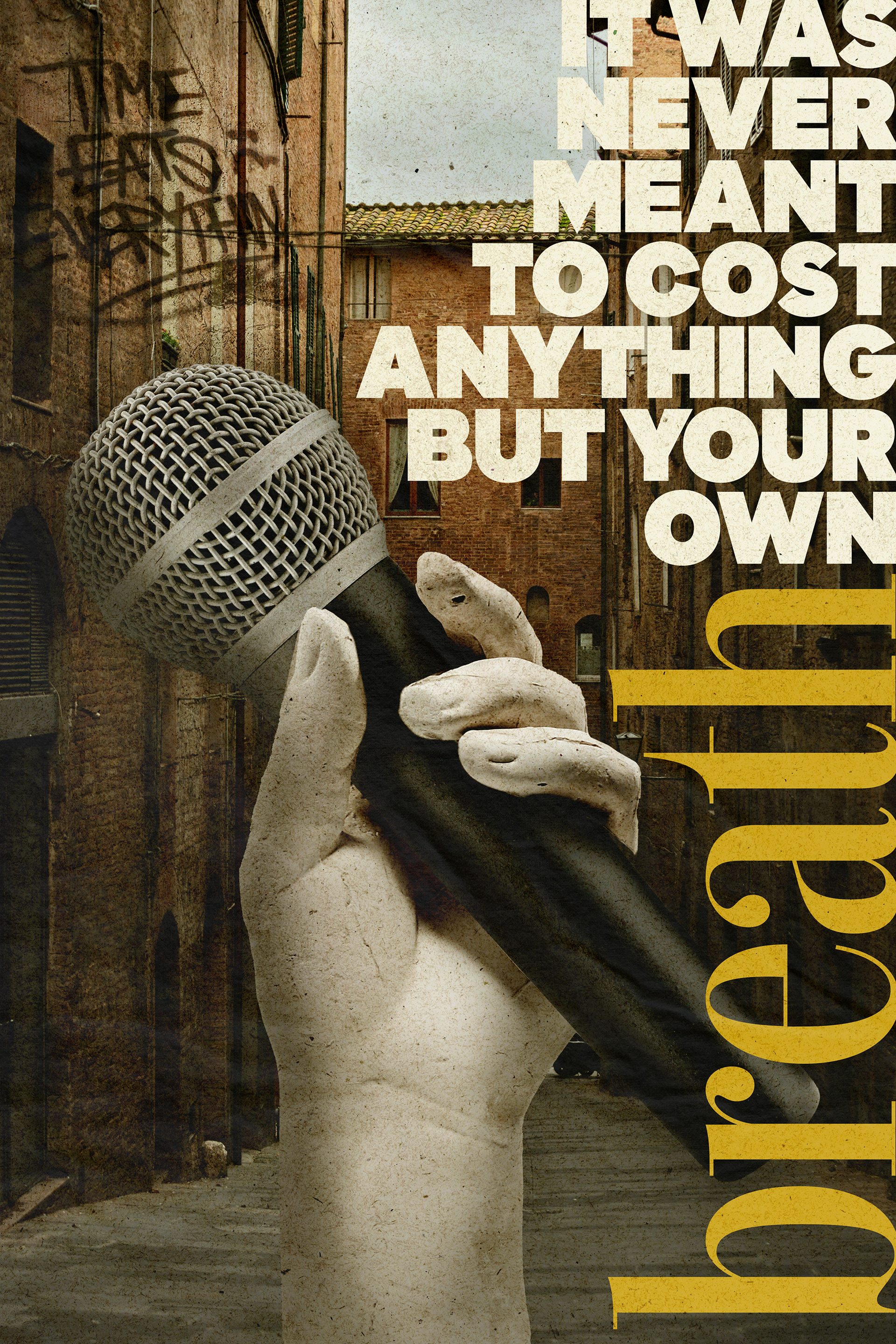
Another, titled “The Cost of Breath,” pulls the language of capitalism into something intimate. It critiques how even rest, expression, and movement have been commodified. To dance, to sing, to breathe fully sometimes feels unaffordable. The poster imagines a world where breath and movement are birthrights, not luxuries.
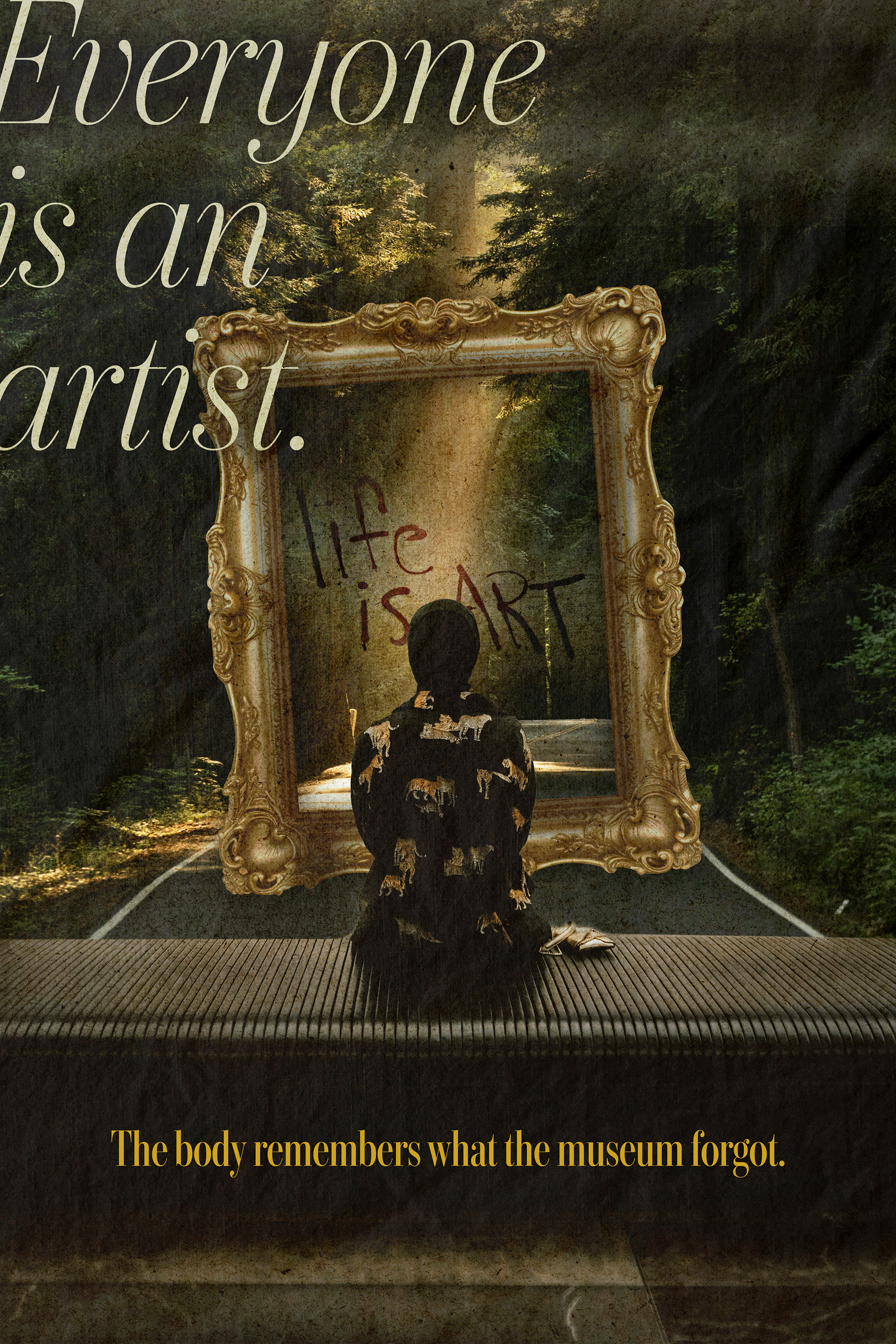
“What the Museum Forgot” addresses institutional erasure. Museums are often framed as protectors of culture, but they also decide whose culture matters, whose stories are remembered, and whose artifacts are displayed, and whose are stolen. This poster calls attention to what is often left out: the street, the kitchen, the body. It reminds us where art lives when no one is watching.
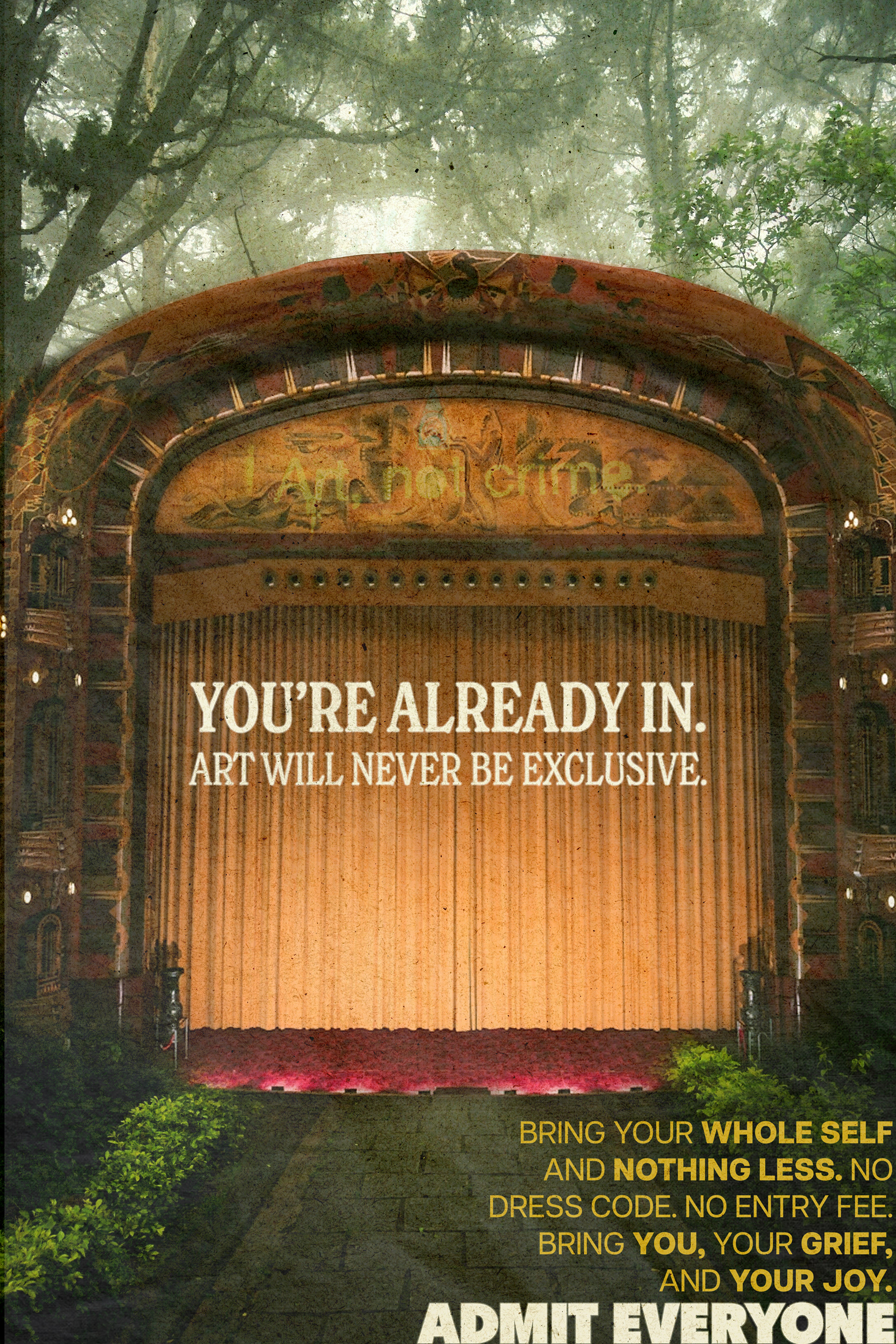
The poster featuring a stage, “You are Already In,” is set not in a traditional venue but in a forest. No walls, no doors, no gates. Its text reads: You are already in. Art will never be exclusive. In smaller type: Bring your whole self and nothing less. No dress code. No entry fee. Bring you, your grief, and your joy. Admit everyone. This is a reminder that belonging is not earned, and that you do not need to be good to be allowed to create.
Together, the posters form a vision: a return to open art, a rejection of gatekeeping, a world where creation is communal again rather than commodified.
To those who sing in kitchens. To those who dance in bedrooms. To those who draw without ever showing anyone. This project is for you. The ones who never got the title of “artist” but have always held the practice.
Admit Everyone closes not with a conclusion, but with a return: a return to land, to community, and to the parts of us that knew how to create before we were told it had to be good, useful, or marketable. This poster series is a gentle push toward remembering that art has always belonged to the people. If we are imagining the end of the world, let it be the end of exclusivity. Let it be a beginning instead, one where we all get to create again.